


20 stories for 20 years: Meeting rural entrepreneurs where they are
Rural entrepreneurs face a unique set of challenges compared to their urban and even their suburban counterparts. Poor infrastructure including limited broadband internet, as well as a lack of access to hospitals, doctors, and childcare providers can make it difficult for rural economies to thrive. And while many cities have dedicated programs to support under-resourced small businesses, that often isn’t true in rural areas. That’s why small business advocacy organizations must help fill the resource void in rural America.
As part of Small Business Majority’s commitment to uplifting rural entrepreneurs, in 2018 we conducted in-person focus groups with small business owners in Georgia, Mississippi, New Mexico and Texas, and hosted roundtable discussions with key stakeholders including Small Business Development Centers, chambers of commerce, economic development organizations and local officials within these rural small business ecosystems in those same four states. We supplemented these qualitative findings with a national poll of rural (defined by U.S. Census codes) small business owners across America. Then in 2019, with support from the Robert Wood Johnson Foundation, Small Business Majority released an extensive research report detailing our findings.
What did we learn? The top challenges facing rural small business owners include taxes, lack of customers and healthcare costs. Additionally, rural employers reported serious difficulty maintaining a qualified workforce. What’s more, 73% said a lack of economic opportunity forces people to leave their community.
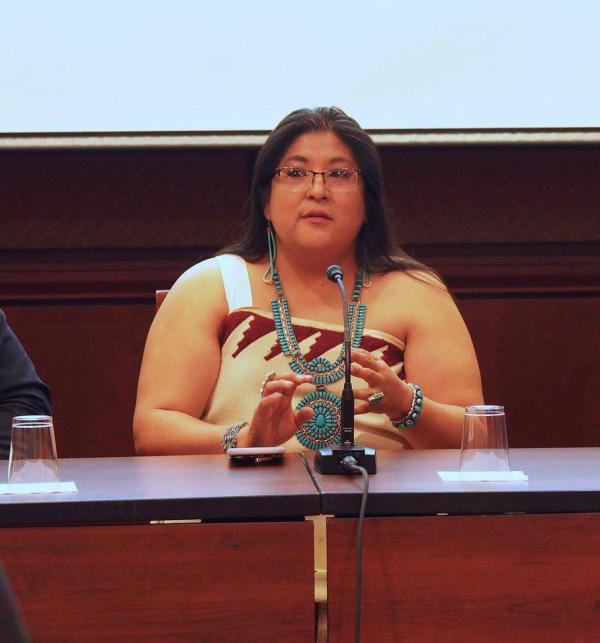
To help turn this data into action, we presented the findings of our year-long report at a briefing on Capitol Hill. Then-Rep. Abby Finkenauer (D-IA), Rep. Adrian Smith (R-NE), and Rep. Terri Sewell (D-AL) each spoke about their personal experiences with rural entrepreneurship and stressed the importance of policies that benefit rural America. We also invited rural small business owner Shayai Lucero, a member of Small Business Majority’s New Mexico Small Business Council.
Shayai, Matriarch and Floral Designer of Earth and Sky Floral Designs and Gallery, was born and raised on the reservations of the Pueblos of Acoma and Laguna in the state of New Mexico. She has been a Small Business Majority spokesperson for more than five years and an advocate for Native American and rural-owned small businesses since opening her floral shop more than 17 years ago. At times, Shayai has struggled with access to necessities that others may take for granted, including high-speed internet. At one point, a fiber optic cable ran right by her home – but she couldn’t tap into it.
Shayai’s call to ensure rural small business voices are heard by policymakers echoes our rural advocacy work over the years. One example of this commitment came in 2021, when we supported the American Jobs Plan Act—a $2 trillion infrastructure reform package. Our research at the time found broad support for key provisions in the bill, including improving the nation’s physical infrastructure, such as roads, bridges, and airports (79% support), expanded and enhanced broadband infrastructure (76% support), community-based small business incubators and innovation hubs to spur entrepreneurship (80% support), clean energy and clean water projects (83% support), and increased opportunities for small firms to obtain federal contracts to work on infrastructure projects (80% support).
Numbers, however, are most impactful when paired with real-life experiences, and our research comes to life through the voices of small business owners like Margo Clayson, owner of The Mighty Microgreen in rural Idaho, who joined us earlier this year in Washington, D.C., for a series of meetings with federal lawmakers, and has spoken to a number of reporters about the challenges she faces – including tariffs.
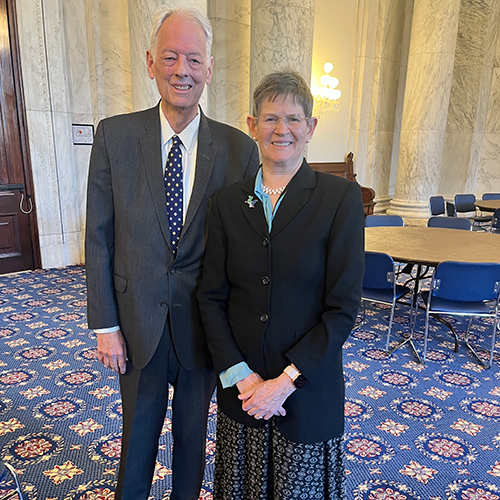 “We need advocates who understand the unique challenges of rural communities, who recognize the hard work we put in to support our families and local economies, and who will stand by us when the stakes are high, as they are right now,” Margo said. “Small Business Majority gets it. Working with them has given me hope in this difficult time. They bring the knowledge, experience, and dedication to effectively advocate for The Mighty Microgreen and other businesses like mine. My experience in DC opened my eyes to the power struggles and challenges small businesses nationwide face, and I realized I’m not alone in this fight. SBM has given me a platform and the tools to educate policymakers about the realities we face, providing me with a much-needed voice in the conversation.”
Following the 2018 report and with support from Rural Democracy Initiative, Small Business Majority expanded its outreach in our state offices and intentionally built relationships with small businesses and business organizations in rural areas of states like California, Colorado, Illinois and Georgia. Today, rural policy work remains central to achieving Small Business Majority's mission of creating an equitable economy and a level playing field for small firms, as well as helping them improve their communities. We continue to host virtual and in-person events to connect rural small business owners with resources, educate policymakers and the media about their needs, and advocate for policies that strengthen the small business ecosystem so that opportunity will exist for all small businesses, regardless of where they are located.
20 Stories for 20 years
Since our founding in 2005, Small Business Majority has worked to empower America’s diverse entrepreneurs to build a thriving and inclusive economy through a mix of advocacy and education. But none of what we do would be possible without the people and organizations who lend their support – and their voices. As we recognize our 20th anniversary, we believe it’s important to honor those who helped us improve the landscape for small businesses over the years. One of the ways we’re doing that is through a series of 20 stories that reflect on the past and present of Small Business Majority, and also celebrate the ways in which we have worked as a collective to advance our mission to level the playing field on behalf of America’s entrepreneurs.