


20 stories for 20 years: ‘States are the laboratory of new ideas’
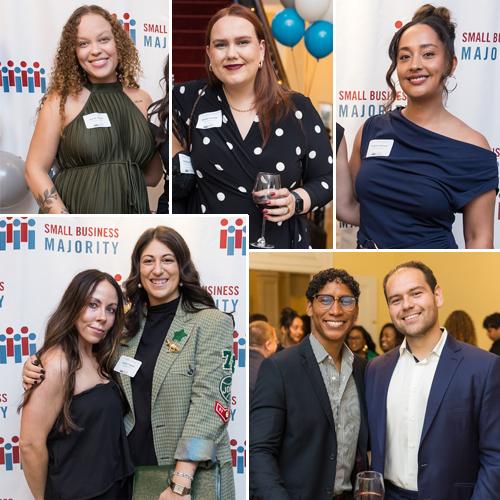
As Small Business Majority Founder & CEO & John Arensmeyer likes to say: “States are the laboratory of new ideas.” That’s one reason why from the beginning, Small Business Majority has worked extensively to advocate for state and local policy solutions that benefit America’s entrepreneurs, including state-run retirement programs, paid family and medical leave, improved access to capital and business resources, Medicaid expansion and much more. For 20 years, we have achieved meaningful progress on many issues across multiple states through the strength in numbers that comes from coalition building and by activating small business owners who share their perspectives with lawmakers during policymaking discussions.
Small Business Majority actually got its start on the state level in 2005, working to make healthcare more affordable in California. Then, after we supported the passage of the Affordable Care Act (ACA) in 2009-10, we knew that states would have to play a critical role to help implement the legislation. In California, the then-Republican governor and Democratic state legislature immediately got to work to create a state-run marketplace for individuals and small businesses. Since we were headquartered in California at that time, it was only natural for Small Business Majority to get involved. Current Vice President of Policy & Advocacy and then-California Outreach Manager David Chase started working with state legislators, state healthcare advocacy groups and others to implement the ACA by creating the California healthcare exchange and expanding Medicaid. Small Business Majority also worked to enshrine all of the ACA’s consumer protections into California law in the event that the federal law was ever repealed or weakened.
In the early 2010s, our team also recognized that the ACA could only be successful if small business owners were educated about how they could enroll in the marketplace, how the law could benefit their businesses and what their responsibilities were as employers in terms of offering health benefits. This effort was the beginning of the educational programming that Small Business Majority is known for today. Business owners had a lot of questions, and we were there to answer them. This work eventually led us to secure our first large-scale grant on healthcare education, from Covered California, and we have been able to continue our work advocating for affordable healthcare in California and across the country ever since.
 “Working mostly with state-based advocacy organizations, Small Business Majority’s experience and connections in the federal policy world were a huge advantage as we began our state work,” David said. “Combining this experience and the local knowledge of in-state partners led to really impactful policy work and lasting relationships.”
It took years of hard work to pass and implement the ACA and by 2012, we were able to expand our policy agenda to other issues using what we learned from our healthcare advocacy as well as the partnerships we gained with lawmakers and advocacy organizations along the way. In California, we went on to support and improve the nation’s first paid family and medical leave insurance program, serving on the Governor's Paid Family Leave Task Force, and we played an instrumental role in getting CalSavers, the state-run retirement savings program, off the ground. Both programs have been critical to helping small businesses in the state facilitate access to benefits that they typically can’t afford on their own, and we’ve advocated for similar programs in states like Colorado, Georgia, New Mexico, Virginia and more.
Today, our work in the states still goes beyond supporting bills and providing testimony. We are invited by governors to join task forces to ensure that once policies pass, they are enacted as effectively as possible. We also continue to take a hands-on approach to educating small business owners about new programs that affect them and how they can benefit.
Over time, we also began to expand geographically to replicate the work we accomplished in California. Small Business Majority is now active in 13 states and the District of Columbia. In Colorado, for example, we’ve worked for more than 13 years building strong relationships and playing an integral role in passing legislation like the state’s paid family and medical leave program and laws that support the state’s immigrant entrepreneurs and childcare providers. Over the years, we’ve forged relationships with key Colorado elected officials—partnering with Gov. Jared Polis during the COVID-19 pandemic, with the state insurance commissioner on open enrollment awareness, and serving on Denver Mayor Mike Johnston’s transition team in 2023.
The reason we are able to be so successful in our states is thanks to our Outreach Team — a group of policy experts, community leaders and organizers. They are the primary faces of Small Business Majority on the ground, hosting in-person and virtual events that allow them to meet small business owners where they are. They also connect with local chambers of commerce, lawmakers and organizations to advocate for small business needs.
The impact of our Outreach Team can be seen in a number of states, including Georgia. In 2020, we made a timely entrance into the Peach State, just at the start of the pandemic. Georgia Director Rachel Shanklin created our first state small business council and continues to work to push the needle in Georgia on Medicaid expansion, occupational licensing reform and more. In her first year alone, Rachel reached 800 business owners through her events, which contributes to our now thriving Georgia network.
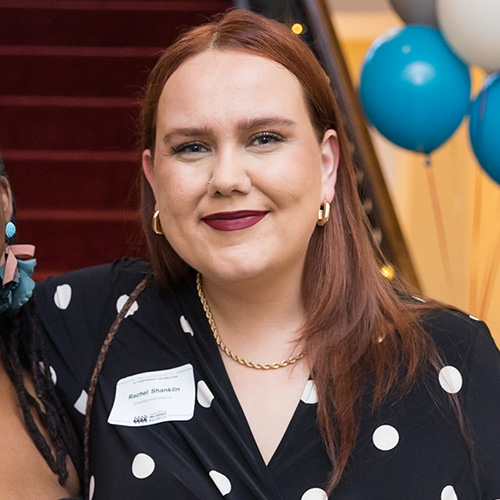 “Stepping into a new state during the height of the pandemic was disorienting and grounding all at once,” Rachel said. “Georgia’s small business community was hurting, but it was also resilient in ways I had never witnessed before. My work at Small Business Majority became more than a job—it became a commitment to helping entrepreneurs rebuild, recover and reimagine what was possible.”
Since the COVID-19 pandemic, we’ve continued to expand into a number of other states where we feel we can make a difference in advancing small business friendly policy. In the last few years, we’ve begun work and developed policy agendas in Minnesota, New Mexico, New York, North Carolina, Pennsylvania and Texas.
Last year, we opened our newest office: in New York City, where New York Director Lindsey Vigoda is leading the charge on a new type of outreach campaign that we’re calling “The New York Small Business Roadshow.” This is a series of events held in small towns and small business hubs throughout New York State designed to meet small business owners in their community and to introduce them to Small Business Majority and the world of small business advocacy.
From New York to California, our commitment remains the same: to elevate the voices of small business owners and to ensure they have a seat at the policymaking table. The work that happens in our state offices not only drives meaningful local change but also shapes the national dialogue on how to build a more inclusive, resilient small business economy. As states continue to serve as laboratories of new ideas, our on-the-ground efforts will keep fueling innovation, collaboration and progress for small businesses nationwide.
20 Stories for 20 years
Since our founding in 2005, Small Business Majority has worked to empower America’s diverse entrepreneurs to build a thriving and inclusive economy through a mix of advocacy and education. But none of what we do would be possible without the people and organizations who lend their support – and their voices. As we recognize our 20th anniversary, we believe it’s important to honor those who helped us improve the landscape for small businesses over the years. One of the ways we’re doing that is through a series of 20 stories that reflect on the past and present of Small Business Majority, and also celebrate the ways in which we have worked as a collective to advance our mission to level the playing field on behalf of America’s entrepreneurs.