


20 stories for 20 years: Affordable Care Act revolutionizes entrepreneurship
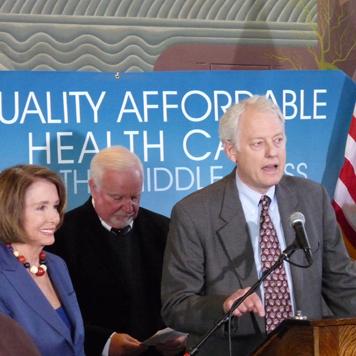
When John Arensmeyer launched Small Business Majority in 2005, he was trying to fill a gap in the advocacy space. As a former small business owner himself, he recognized that the overwhelming majority of entrepreneurs didn’t have the resources to receive meaningful attention from their elected officials. He also saw that most of the small business advocacy groups at the time tended to conflate the needs of big businesses with the needs of small firms. But John knew better – Microsoft and Main Street usually face very different challenges, after all. With that in mind, Small Business Majority was born to uplift true small business voices and offer support tailored to the smallest firms and the most vulnerable entrepreneurs.
Small Business Majority’s approach to advocacy work soon paid off with a major victory in healthcare policy. When then-President Barack Obama announced that healthcare reform would be his signature legislative initiative, it presented a rare opportunity to turn policy changes made in Washington, D.C., into a lasting support system that would boost both current and aspiring small business owners nationwide.
Accessing quality, affordable health insurance coverage has long been challenging for small business owners and their employees. Before the Affordable Care Act (ACA), this was true in part because health insurance companies could deny customers coverage or charge them higher premiums for all sorts of pre-existing conditions including diabetes, cancer and even broken bones. As a result, many would-be entrepreneurs were trapped in jobs mainly because they couldn’t afford health insurance on their own.
Once Obama and his allies in Congress got to work advancing the ACA, Small Business Majority joined the fight, fresh off a “warm-up” healthcare reform battle in California. We published extensive research about small business needs, securing a New York Times exclusive, and built lasting relationships with key legislators and White House officials. Most importantly, our network of small business owners, including Maryland entrepreneur Mike Brey, shared their stories widely with key elected officials and national media to ensure that policymakers took the needs of small businesses into account when drafting the ACA in 2009-10. At that time, Mike offered health coverage to his employees but struggled with huge cost increases – sometimes as high as 30% per year. Many of his employees chose to drop their health insurance entirely because the increases were more than they could afford.
We caught up with Mike recently about his experience advocating for better healthcare options. Mike said that after the ACA became law, healthcare costs for his business and his employees stabilized.
Mike wasn’t alone in benefiting from the ACA. The Robert Wood Johnson Foundation and Urban Institute estimated that up to 1.5 million people would become self-employed as a result of the new healthcare law.
Unfortunately, that wasn’t the end of the story on the ACA – or Small Business Majority’s advocacy work in support of the landmark legislation. When a new administration and Congress tried to repeal the ACA in 2017 and replace it with a law named the American Health Care Act (AHCA), which would have capped Medicaid spending, repealed taxes that support ACA benefits and allowed states to waive consumer health protections, small business owners nationwide once again mobilized to fight for benefits that had been critical to their business success.
The Congressional Budget Office estimated that the AHCA would have resulted in 22 million more uninsured people by 2026 and that people who kept their coverage would have ended up paying more for plans that offered less care. This would’ve been disastrous because more than half of all ACA marketplace enrollees were small-business owners, self-employed individuals or small-business employees in 2017. Therefore, it wasn’t surprising that Small Business Majority’s research found that entrepreneurs preferred the ACA over the AHCA by a 2:1 ratio.
To save the ACA, Small Business Majority enlisted the help of entrepreneurs like Pennsylvania business owner Andrea Deutsch. As someone living with Type 1 diabetes, Andrea needed health insurance to get the medical care she needs just to remain alive and healthy. Andrea shared her story with the media and federal policymakers so they could better understand why many small businesses rely on the ACA.
After months of debate and passage in the U.S. House of Representatives, the U.S. Senate narrowly decided not to advance the AHCA in the summer of 2017. This was and remains one of the biggest victories for America’s small businesses in the last 20 years. Although the ACA still faces threats and healthcare costs remain a challenge for many small businesses today, health coverage is more accessible and more affordable than it once was – thanks in part to a group of entrepreneurs who were not afraid to stand up for themselves, their businesses and America’s economy.
20 Stories for 20 years
Since our founding in 2005, Small Business Majority has worked to empower America’s diverse entrepreneurs to build a thriving and inclusive economy through a mix of advocacy and education. But none of what we do would be possible without the people and organizations who lend their support – and their voices. As we recognize our 20th anniversary, we believe it’s important to honor those who helped us improve the landscape for small businesses over the years. One of the ways we’re doing that is through a series of 20 stories that reflect on the past and present of Small Business Majority, and also celebrate the ways in which we have worked as a collective to advance our mission to level the playing field on behalf of America’s entrepreneurs.