


Texas entrepreneur overcomes hurdles to build a family legacy
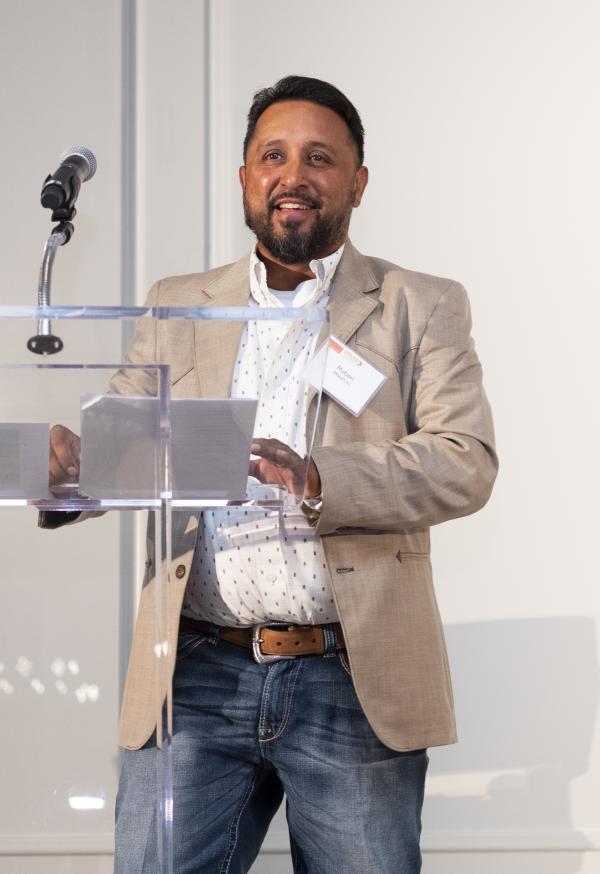
Imagine a business model built simply on character: you keep your promises and deliver value to your customers. Word spreads about responsive service, quality work, and fair billing—without advertising, a website or even business cards. Customers refer your business to others including the customer’s competitors.
That’s how Ruben Mauricio began RPM Diesel Services in Denver City, Texas. He built his business even though he didn’t come with a polished résumé or from a business school classroom. Instead, he grew up in a tough neighborhood, with an abusive father who was later killed in a drive‑by shooting. Ruben’s mother worked tirelessly to keep a roof over the family’s heads, while Ruben learned to fight, hustle and survive.
Some bad choices eventually caught up to Ruben, and he served eight years in prison. Yet that was also where Ruben chose to change his life by taking a different path. Through the Prison Entrepreneurship Program (PEP), he was introduced to character-based business principles. He began to see that solid character—his own and those he surrounded himself with—could change everything.
Before his incarceration, Ruben had been running the streets—always looking for opportunities, figuring out distribution, managing supply chains, handling “HR” issues and keeping cash flow strong. While those activities were part of a criminal lifestyle, the underlying skills mirror the challenges faced by any legitimate business. It taught Ruben how to maintain margins, balance customer demand with inventory, and navigate a heavy regulatory environment. In hindsight, that hard‑won knowledge was an unconventional MBA. Combined with his new foundation of character, it became a powerful asset when Ruben stepped into the legitimate marketplace.
When Ruben launched RPM Diesel Services in 2018, he leveraged both his past street‑level business acumen and his new foundation of character. He focused RPM on repairing chemical treater trucks and chemical delivery trucks in the Permian Basin—a niche market in oilfield production that provides stability compared to the cyclical drilling sector.
“Starting up during a down cycle in the oil industry wasn’t easy. My wife and cofounder Maritza and I pawned her wedding ring and took out a title loan to get our company off the ground. That was our venture capital,” Ruben said.
Like many small businesses, RPM ran into hurdles—mentorship and financing being two of the biggest. Ruben worked hard to surround himself with people smarter than him, leaning on seasoned PEP business executive volunteers for guidance. Financing was even tougher. For any startup, access to capital is hard. For a returned citizen with a felony record, it can be nearly impossible. Traditional lenders turned RPM away, but through PEP’s CDFI, Entre Capital, RPM was able to secure trucks needed for growth. But even today, a criminal record casts a long shadow on RPM’s financial opportunities.
Another ongoing challenge is building the right team. Small businesses often struggle to compete with larger companies for talent. RPM needs the right people in the right seats—people who share Ruben’s vision and values—while also managing day-to-day operations and laying the groundwork for a family legacy.
Despite these challenges, RPM thrives because of character, grit, and resilience forged in the toughest of circumstances. Ruben and Maritza’s story is a reminder to other small business owners: even with systemic barriers, you can build something meaningful, generational, and transformative.
“Ultimately what RPM seeks is relationship, not just sales,” said Ruben. “Every repair is part of a bigger mission. We’re turning hard lessons into a family legacy and showing that second chances can power not only trucks, but entire communities.”